Friday, June 14, 2013

Underwater films and jellyfish!

We are continuing to celebrate oceans this month on Saipan with a few more activities that you should know about...

First, there is a great new series of underwater videos showing for FREE on youtube. Check out Craig Musburger's fantastic footage in his series of UnderH2O shorts here: http://www.youtube.com/user/UnderH2Oshow?feature=watch. Craig is the videographer who filmed our very own Laolao Bay documentary that was debuted at First Friday Films last November. 

We'd also like to pass along a message from APASEEM about a "The Science of the Sting" -- a talk about field ecology and the venoms of box jellyfish that will be held at American Memorial Park next Wednesday, June 19th from 6:30-7:30pm (see more information below).

We hope you can make it to the event!


The Science of the Sting

Field Ecology and Venoms of Box Jellyfish

Have you ever been stung by a jellyfish? Are there highly poisonous box jellyfish in our local waters? If they are attracted to lights, can some jellyfish see? Are they present even in the daytime? Want to find out more about these fascinating marine animals?

This coming Wednesday the Asia Pacific Academy of Sciences, Science Education, and Environmental Management (APASEEM) will host a public presentation at the American Memorial Park auditorium by a visiting scientist currently conducting box jellyfish research in our local waters. Time: 6:30 to 7:30/8pm. Date, Wednesday, June 19, 2013.

Cubozoans or box jellyfish are the most specialized class in the Cnidaria phylum, a phylum (group) that also includes sea anemones and corals. Dr. Angel Yanagihara, a research professor at the University of Hawaii, has been characterizing the field ecology, reproductive biology and venom biochemistry of multiple box jellyfish species in Hawaiian waters since 1997.


Reports of box jellyfish in the Caribbean waters off Bonaire, Netherlands (former Dutch Antilles) recently led her to conduct field research there and she brought some film footage to share. As part of a global phylogeography effort she is currently investigating local box jellyfish species in the waters off Saipan. Dr. Yanagihara will present an overview of her research. Interested members of the public are invited, and, as at all APASEEM meetings, questions from everyone is strongly encouraged.

Wednesday, June 5, 2013

Celebrate oceans, surfing and clean water this Friday


FFF has another exciting NEW film for you this coming Friday, June 7th at 6:30pm at American Memorial Park. We will be showing Keepers of the Coast in celebration of World Oceans Day (June 8) and International Surfing Day (June 21).

Every year beaches are closed due to pollution. Millions of dollars in tourism and related industries can be lost from beach closings, in addition to the devastating impact that polluted beaches can have on subsistence fishing, income, health and recreation. Surfers all over the world are realizing the importance in monitoring and preventing pollution on the beaches. When our coastline is polluted, surfers take it on the skin, in their eyes and ears, and even in their guts.

Since the making of this film in 1996, surfers have been organizing world-wide: testing water quality, funding research on wetland restoration, and educating the public in schools and communities. This film takes us back to the 1990s to show us what the beaches looked like then and what ocean enthusiasts decided to do about it. To bring us back to the present, Clarissa Bearden from the DEQ Water Quality branch will speak before the film about the CNMI’s beach monitoring program.

First Friday Films is a partnership between American Memorial Park, the Division of Environmental Quality, Coastal Resources Management and the Humanities Council with support from other organizations. This particular film is sponsored by DEQ. As always, our film events are free and open to the public. This event will run about 60 minutes. 


This June marks three years of First Friday Films providing free monthly documentaries to the public to keep you entertained and educated on issues related to our environment. A big THANK YOU to our viewers for supporting the program and coming back month after month. :)

Wednesday, May 1, 2013

NEW FILM about nutrition and the environment


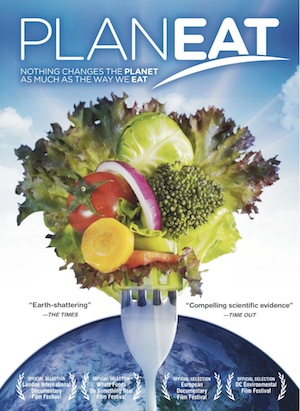
First Friday Films would like to invite you to a showing of PLANEAT this Friday, May 3rd at 6:30pm at American Memorial Park’s theatre.

PLANEAT is the story of three men's life-long search for a diet which is good for our health, good for the environment and good for the future of the planet. With an additional cast of pioneering chefs and some of the best cooking you have ever seen, the scientists and doctors in the film present a convincing case for the West to re-examine its love affair with meat and dairy. The film features the ground-breaking work of Dr. T Colin Campbell in China exploring the link between diet and disease, Dr. Caldwell Esselstyn's use of diet to treat heart disease patients, and Professor Gidon Eshel's investigations into how our food choices contribute to global warming, land use and oceanic deadzones. With the help of some innovative farmers and chefs, PLANEAT shows how the problems we face today can be solved, without simply resorting to a diet of lentils and lettuce leaves.

Before the film, Kate Campbell, a dietitian on Saipan, will talk about building our own healthy diets. You can check out her blog at www.VeggieKate.com

First Friday Films is a partnership between American Memorial Park, the Division of Environmental Quality, Coastal Resources Management and the Humanities Council with support from other organizations. This film is sponsored by DEQ. As always, our film events are free and open to the public. This event will run about 70 minutes.

Tuesday, April 30, 2013

Events at AMP this Thursday and Friday


On Thursday, May 2nd at 4:15pm, the Mariana Avifauna Conservation Project will be conducting a presentation on their bird conservation efforts in the CNMI. The public is invited to attend, see details below.

And of course, May's First Friday Film will be May 3rd at 6:30pm. Please join us for Planeat, a film about nutrition and diets that are good for your health and may be good for the environment. More details to come.


Upcoming Presentation on Mariana Islands Birdlife:
The mid-1980s saw the brown tree-snake either extirpate or drive to extinction nine of 12 species of forest bird on Guam.  Almost 20 years later the U.S. Department of the Interior determined that Saipan may support an “incipient” population of this serious invasive predator.  In 2005 the CNMI Division of Fish and Wildlife (DFW), the U.S. Fish and Wildlife Service, and the Association of Zoos and Aquariums (AZA) determined that preemptive action was necessary for the CNMI’s birdlife to avoid the fate that befell Guam – thus, the Mariana Avifauna Conservation (MAC) Project became a reality.


The MAC Project’s endeavors are two-fold; 1) the maintenance of captive populations (which serve as genetic reserves) of the CNMI’s native and endemic forest bird species at AZA affiliated institutions on the U.S. Mainland, and 2) the establishment of satellite populations of these bird species on islands in the Mariana archipelago deemed safe from brown tree-snakes.  Captive breeding programs at participating zoos on the U.S. mainland have thus far experienced success with the Mariana Fruit Dove, the White-throated Ground Dove, and the Golden White-eye.  Likewise, satellite populations of Bridled White-eyes, Golden White-eyes, and Mariana Fruit Doves have successfully been established on Sarigan via a program of conservation introduction.  In both endeavors, however, there is more work ahead of the MAC Project.

In April and May of this year 16 staff members from 10 AZA affiliated zoos and conservation organizations will join DFW on Saipan to execute the eighth year of the MAC Project’s annual field efforts.  This year’s focus will be the translocation of Mariana Fruit Doves and Rufous Fantails from Saipan to Sarigan, and the addition of fantails and Bridled White-eyes to captive programs at zoos in the States.  

Presenting on this topic will be CNMI Ornithologist Mr. Paul Radley, together with visiting scientists Mr. Herb Roberts of the Memphis Zoo, and Ms. Ellen Gorrell of the Toledo Zoo. Additional program information is available by visiting the Facebook page Ms. Gorrell maintains via https://www.facebook.com/MarianaAvifaunaConservation. For more information about APASEEM, please visit our website at http://www.apaseem.org.


Tuesday, April 9, 2013

Three short films about marine protected areas

In celebration of Environmental Awareness Month, we wanted to pass along these three short films about marine protected areas in the Pacific region from the Ocean Health Index Film Festival. Check them out!


Don't forget to check deq.gov.mp for information on upcoming activities, including:

April 13, 8am -- Bird Hike and Invasive Species Removal at Bonzai Trail

April 19, 6pm -- Deadline for the OurLaolao Photo Contest (on facebook)

April 20, 9am -- Coral Watch Dive at Laolao Bay

April 20, 12pm -- Recycled Boat Race at Kilili Beach

We hope to see you at some of these events!

Tuesday, April 2, 2013

Gasland this Friday and EAM kickoff!

Welcome To GASLAND

Happy April! Many of you know that April is Environmental Awareness Month, an excellent time to consider how you use and how you affect our environment, and also a great time to give back! Check out http://deq.gov.mp/ for a list of EAM events taking place all month. 
To kick things off, First Friday Films will be showing the documentary “Gasland” this Friday, April 5th at 6:30pm in American Memorial Park’s theatre. 
The largest domestic natural gas drilling boom in history has swept across the United States. The drilling technology of "fracking" or hydraulic fracturing has unlocked a "Saudia Arabia of natural gas" just beneath us. But is fracking safe? When filmmaker Josh Fox is asked to lease his land for drilling, he embarks on a cross-country odyssey uncovering a trail of secrets, lies and contamination. A recently drilled nearby Pennsylvania town reports that residents are able to light their drinking water on fire. This is just one of the many absurd and astonishing revelations of a new country called GASLAND. 

Fracking has been an important subject in the mainland environmental movement, but how does it relate to Saipan? Andrew Ashburn from the CNMI Energy Office will give a brief presentation before the film about where our energy comes from and what the costs and benefits of energy use are for our island. 
First Friday Films is a partnership between American Memorial Park, the Division of Environmental Quality, Coastal Resources Management and the Humanities Council with support from other organizations. This particular film is sponsored by CRM. As always, our film events are free and open to the public. For planning purposes, this event will run about 90 minutes.

Stay tuned for more information and short videos to check out this month to celebrate Earth!

Thursday, March 21, 2013

Student research presentations Friday (22nd) at AMP


A group of mainland college students from Northern Arizona University have been on Saipan for a semester-long field experience in conservation biology. As they wrap up their visit, they are presenting on their research projects at American Memorial Park on Friday, March 22nd from 1-5pm. The public is welcome to attend!

Northern Arizona University Field Experience in Conservation Biology
Conservation Research Symposium
American Memorial Park
Saipan, CNMI
March 22, 2013

1:00-1:15              Opening remarks.

1:15-1:30              Factors affecting the species abundance and richness of fish in sea grass beds in the Saipan lagoon. Alling, R.

1:30-1:45              Contemporary medicinal trees: Diversity and use across the island of Saipan. Marshall, M.

1:45-2:00              Variation in luminescence and insect abundance on bioluminescent fungi. Pletzer, J.

2:00-2:15              Factors affecting green sea turtle nesting preference in Saipan. Brown, M.

2:15-2:30              Erythrina gall wasps on gaogao trees, and their effect on birds in Saipan. Watson, Z.

2:30-2:45              Intermission break.

2:45-3:00              The effect of enrichment strategies and environmental factors on the behavior of captive Mariana fruit bats (Pteropus mariannus). Eilers, J.

2:45-3:00              Effects of sewage effluence on coral reef diversity, richness, and recruitment. Senini, N.

3:15-3:30              Demographics, distribution, and public perceptions of free-ranging dogs on Saipan. Nimer, A.

3:30-3:45              Predation of the small giant clam (Tridacna maxima) in Saipan. Roof, K.

3:45-4:00              Evidence of selective breeding and habitat use in Lambis lambis. Raber, S.

4:00-4:15              Factors influencing metallic blue ladybird beetle abundance. Hottel, E.

4:15-4:30              Shell use and abandonment in hermit crabs (Coenobita spp.). Bulger, B.

4:30-4:45              Closing remarks.


We are grateful to our generous sponsors, collaborators, and supporters: CNMI Department of Land and Natural Resources, Division of Fish and Wildlife; Asia Pacific Academy of Science, Education and Environmental Management; Northern Marianas College; Saipan Zoo; Mayors of Saipan, Tinian, and Rota; CNMI Department of Environmental Quality; CNMI Coastal Resource Management; National Oceanographic and Atmospheric Association; Commonwealth Utility Corporation; CNMI Historical Preservation Office; American Memorial Park.